
316L Stainless steel plate
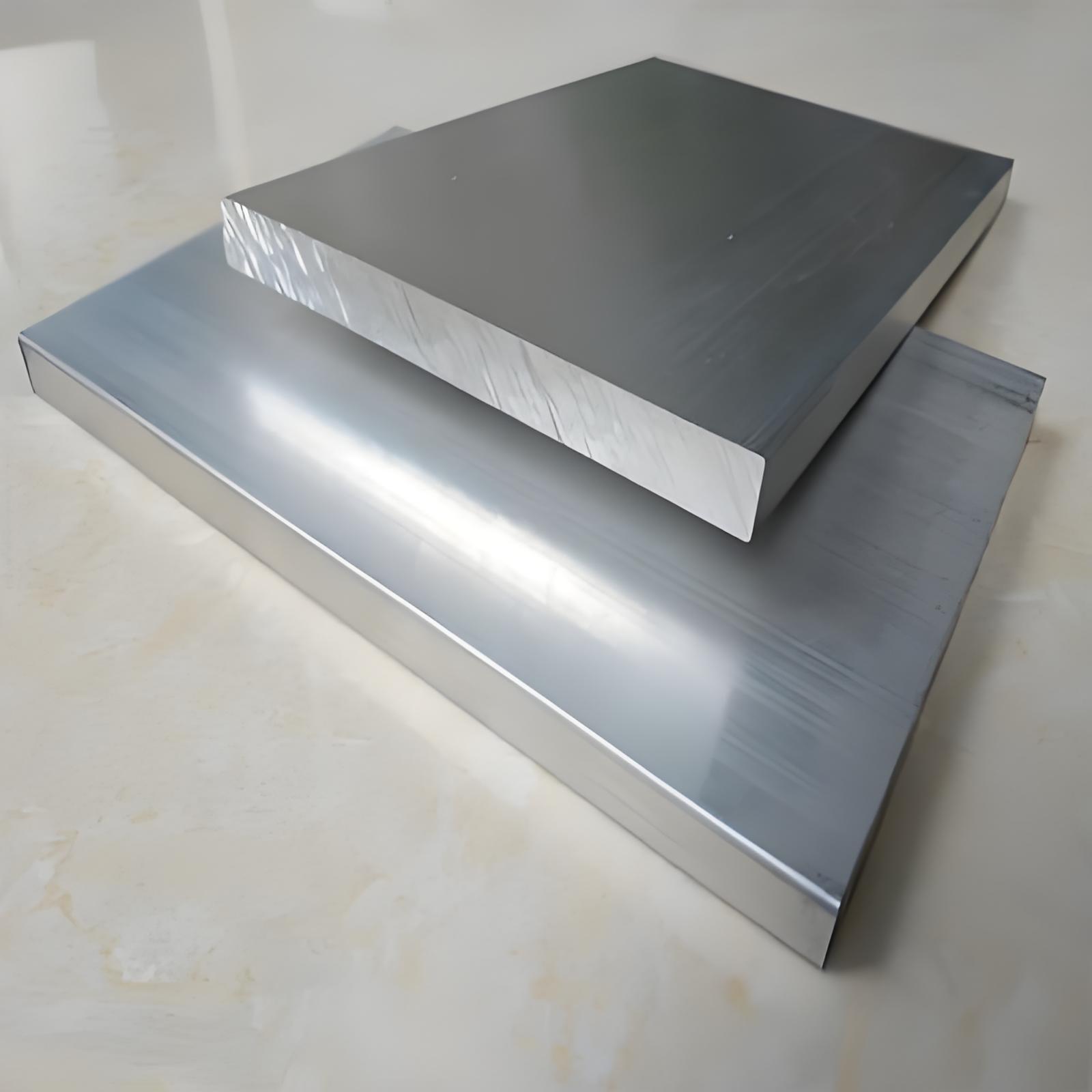
316L Stainless steel plate
316L stainless steel has good intergranular corrosion resistance in the sensitized state and is suitable for manufacturing welded components and equipment with thick sections, such as equipment for petrochemicals, fertilizers, papermaking, dyeing, and nuclear industries, as well as hydrogen storage and hydrogen/liquid helium storage pressure vessels in the pharmaceutical, food processing, hydrogen energy storage and hydrogen/liquid helium storage and transportation industries.
Thicker flat product, typically hot rolled for heavier-gauge fabrication. Confirm No.1 finish, cutting, and tolerance requirements.
Product Details
316L is a grade of stainless steel defined by the ASTM standard system; its equivalent in the Chinese GB standard system is 022Cr17Ni12Mo2, and its Unified Numbering System (UNS) designation is S31603. Internationally recognized designations include JIS SUS316L (Japan) and BS EN 1.4404 (EU). Stainless steel is a general term for steels that exhibit chemical stability in environments such as the atmosphere, water, acids, alkalis, salts, and other corrosive media. Chromium is the key alloying element responsible for the rust and corrosion resistance of stainless steel; as the chromium content increases, so does the material's resistance to rust and corrosion. Based on their microstructure, stainless steels are classified into five categories: austenitic, austenitic-ferritic (duplex), ferritic, martensitic, and precipitation-hardening. 316L belongs to the austenitic stainless steel category. Austenitic stainless steels possess a face-centered cubic (FCC) crystal structure; they are non-magnetic and cannot be strengthened by heat treatment, relying instead on cold working to enhance their strength. These steels offer excellent corrosion resistance, good plasticity and toughness at both room and cryogenic temperatures, ease of formability, and good weldability, making them the most widely used type of stainless steel in industry—accounting for approximately 70% of total stainless steel production. Due to its molybdenum content and low carbon level, 316L stainless steel exhibits exceptional resistance to chloride-ion corrosion and superior low-temperature toughness. Available product forms include plates, bars, pipes, strips, wires, and forgings. 316L stainless steel demonstrates good resistance to intergranular corrosion in the sensitized state, making it suitable for manufacturing welded components and equipment with thick cross-sections. It serves as a corrosion-resistant material for equipment in the petrochemical, fertilizer, papermaking, textile printing and dyeing, and nuclear industries, and finds applications in pharmaceuticals, food processing, hydrogen storage tank liners, the photovoltaic industry, and pressure vessels for liquid hydrogen and liquid helium storage and transport. Chemical composition: C ≤0.030, Si ≤1.00, Mn ≤2.00, S ≤0.030, P ≤0.045, Cr 16.00–18.00, Ni 10.00–14.00, Mo 2.00–3.00.
Due to its excellent corrosion resistance, 316L is widely used in the chemical industry. It is a derivative of the 18-8 type austenitic stainless steel, featuring an addition of 2–3% molybdenum (Mo). Various other steel grades have been derived from 316L; for instance, adding a small amount of titanium (Ti) yields 316Ti, adding nitrogen (N) yields 316N, and increasing the nickel (Ni) and molybdenum (Mo) content results in 317L.
Most 316L products on the market are manufactured according to American standards. To minimize costs, steel mills typically keep the nickel content near the lower limit of the specification. The American standard specifies a nickel content of 10–14% for 316L, whereas the Japanese standard specifies 12–15%. This 2% difference in nickel content—based on the minimum requirements—translates to a significant price difference; therefore, when purchasing 316L products, customers should verify whether the product complies with ASTM or JIS standards.
The molybdenum content in 316L provides excellent corrosion resistance, allowing it to be safely used in environments containing halide ions, such as chloride ions (Cl⁻). As the primary value of 316L lies in its chemical properties, steel mills generally apply less stringent surface inspection standards for it compared to 304 stainless steel; consequently, customers with high surface quality requirements should conduct more rigorous inspections.