
310S Stainless Steel Sheet
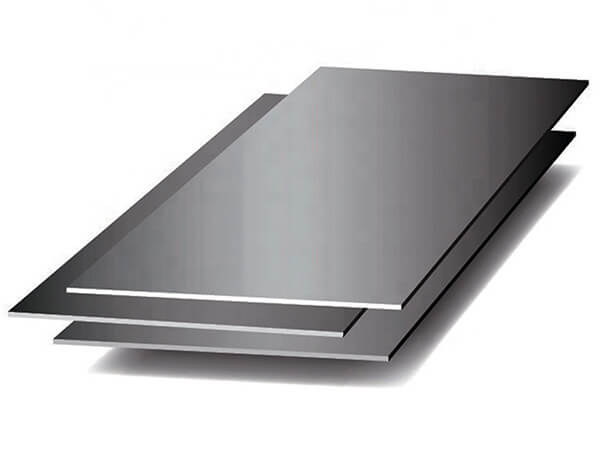
310S Stainless Steel Sheet
310S (06Cr25Ni20) can withstand temperatures above 1000℃ and has excellent oxidation resistance. Applications: High-temperature furnace linings, kiln components, heat treatment tools, incinerators, heat treatment trays, and metallurgical high-temperature equipment.
Thin-gauge, typically cold rolled. Common finish discussions include 2B, BA, and No.4.
Product Details
310S stainless steel sheet (also known as 0Cr25Ni20 or 06Cr25Ni20) is a high-alloy stainless steel of the 25Cr-20Ni series, containing 24%-26% chromium and 19%-22% nickel. It has excellent high-temperature oxidation resistance and corrosion resistance, with a continuous operating temperature of up to 1150°C and a maximum tolerance temperature of 1200°C. In its solution state, it is non-magnetic and has a density of 7.98g/cm³, with a melting point ranging from 1400 to 1450°C.
This material is widely used in industrial furnace components, automotive purification devices, incineration furnaces, and petrochemical equipment in high-temperature scenarios, suitable for manufacturing heat exchangers, boilers, and aviation components, etc., as heat-resistant elements. Through solution treatment (1030-1180°C), the material's properties can be adjusted, featuring stable high-temperature creep strength and good weldability. Its performance is superior to 309S stainless steel and 253MA alloy under 1200°C conditions.
Let's briefly introduce the composition and performance characteristics of 2520 (310S) stainless steel sheet: (1) excellent oxidation resistance; (2) a wide operating temperature range (below 1150°C); (3) non-magnetic in the solution state; (4) high high-temperature strength; (5) good weldability. It is applicable to steel types that require heat resistance, such as exhaust pipes, tubes, heat treatment furnaces, heat exchangers, incinerators, etc., for high-temperature/heat contact components.
310S stainless steel is an austenitic chromium-nickel stainless steel with excellent oxidation resistance and corrosion resistance. Due to the higher percentage of chromium and nickel, it has much better creep strength, capable of continuous operation at high temperatures. It has good oxidation resistance, corrosion resistance, acid and alkali resistance, and high-temperature resistance. High-temperature steel tubes are specifically used for electric heating furnace tubes and other occasions. After adding carbon to austenitic stainless steel, due to its solid solution strengthening effect, the strength is increased. The chemical composition characteristics of austenitic stainless steel are based on chromium and nickel, with elements such as molybdenum, tungsten, niobium, and titanium added. Due to its face-centered cubic structure, it has high strength and creep strength at high temperatures.